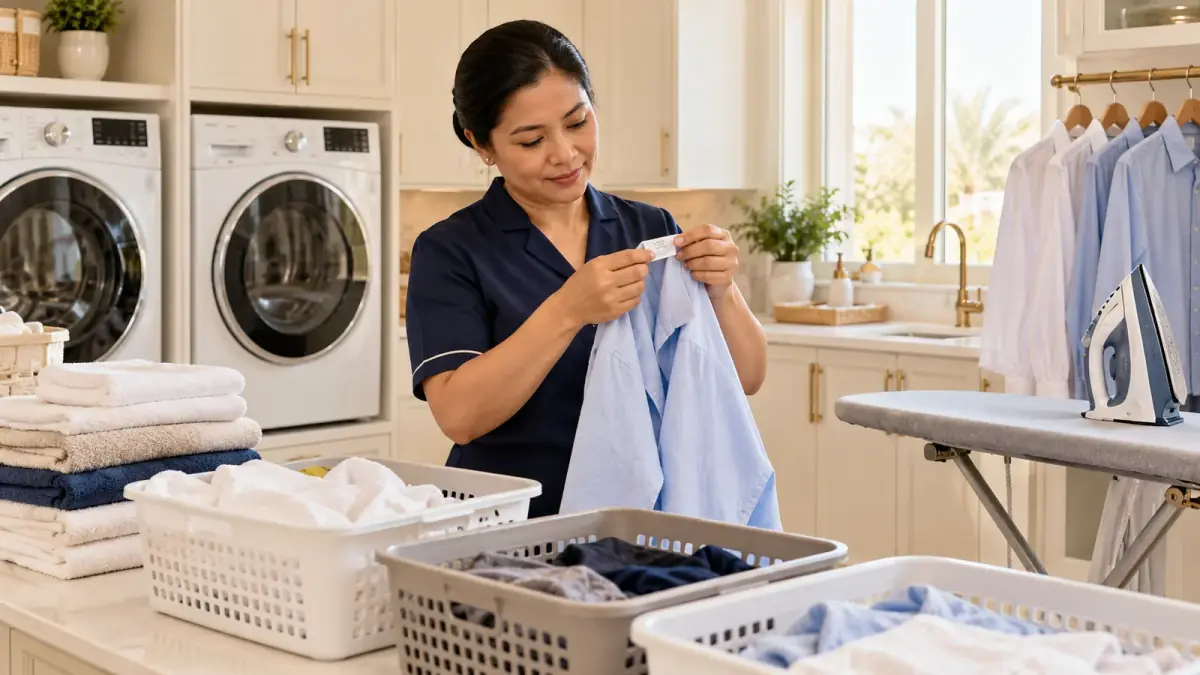
Arrange laundry and ironing as a defined household task, with a prioritised garment list, care-label instructions, an agreed finish standard and enough space for drying and storage. Tell INAYA whether the main need is washing, folding, ironing or a combination. A basket of shirts, a bedding change and delicate garments are different workloads, even when they occupy the same amount of floor space.
Prioritise
List the garments and the time-sensitive items.
Check
Review labels, condition, products and equipment.
Process
Follow the agreed wash, dry or ironing sequence.
Handover
Record ready, drying and owner-decision items.
Original INAYA planning workflow: use the garment label and your appliance instructions at each stage.
Describe the work before selecting a visit
Start with what is waiting, rather than a general request to “finish the laundry.” List everyday clothes, school uniforms, bedding and any items needed by a particular time. Separate the pieces that require a professional laundry or a decision from the owner. Agree whether putting clothes away is part of the task and show the correct storage locations.
This is a task-planning guide. For the wider job scope, read how to agree household duties. Use the maid skills assessment guide when discussing experience with your fabrics, appliances and preferred finishing methods.
Use a simple garment handover table
The following is an original household worksheet, rather than a promise about the number of pieces completed during a visit.
| Priority | What to show the worker | Finish or handover required |
|---|---|---|
| Next-day clothing | The exact uniforms, shirts or outfits needed | Washed or ironed as the label allows; placed in the agreed location |
| Everyday machine wash | Care labels, sorting preferences and approved detergent | Correct programme followed; drying status reported |
| Bedding and towels | Which rooms, replacement sets and storage shelves | Agreed beds changed; cleaned items separated from items awaiting drying |
| Delicate or valuable items | Label, existing marks and owner instructions | Set aside for an owner decision or a professional service |
| Ironing only | Clean, dry items and priority order | Agreed finish, safe cooling and hanging or folding |
Let care labels lead the process
GINETEX’s care-symbol guidance explains that labels distinguish washing, drying, ironing and professional textile care. Show the worker the label before treatment; a familiar fabric name alone is not a complete instruction. Keep a separate basket for items whose instructions need discussion.
Bosch UAE’s dryer guidance also directs users to garment care instructions when deciding whether and how an item can be tumble-dried. Introduce the actual appliance in your home. Demonstrate its controls, where the manual is kept and the settings you normally use, then ask the worker to explain the sequence back. Do not ask someone to guess an unfamiliar control or repair a faulty machine.
Plan around the whole laundry cycle
A wash cycle, drying, ironing and wardrobe storage do not necessarily finish together. Agree which tasks take priority while the machine runs and what happens to a load still drying at the end of a visit. Leave a short note identifying the load, its location and the next action. That prevents a second person from repeating a wash or ironing an item still waiting for an owner decision.
Prepare a stable ironing surface, suitable hangers, clear storage space and the products specified for the garments. Keep hot equipment and trailing cables away from children and pets. Demonstrate how equipment is switched off and stored after use. Existing stains or damage should be noted before work begins; explain the reporting route for any new problem without encouraging concealment or blame.
Review priorities and the result together
End the visit with a short review: which priority items are ready, what remains wet, what was set aside and what supplies need replenishing. Judge the agreed work rather than the size of an empty basket. If the recurring workload exceeds the planned visit, adjust the scope or schedule before adding further tasks.
INAYA’s housemaid service page explains the household roles you can discuss. Share the garment categories, equipment and preferred schedule through the contact page so laundry and ironing responsibilities are recorded alongside the rest of the service.
Customer questions and answers
Can I request ironing without washing?
Yes, describe ironing as the task you want to discuss, including clean dry garments, priority items and the finish required. Record the selected scope and schedule in the service agreement.
How many garments can be ironed in one visit?
Plan from garment type, condition, care instructions, equipment and the other agreed duties. Use a priority list and review the actual workload rather than a universal garment count.
Should delicate clothes go into the normal laundry basket?
Keep delicate, valuable and specialist-care items separately. Show their labels and owner instructions before a treatment is chosen.
What if a load is still drying when the visit ends?
Record where the load is drying and who will complete the next step. Agree this handover before the visit so wet items are not forgotten or treated twice.