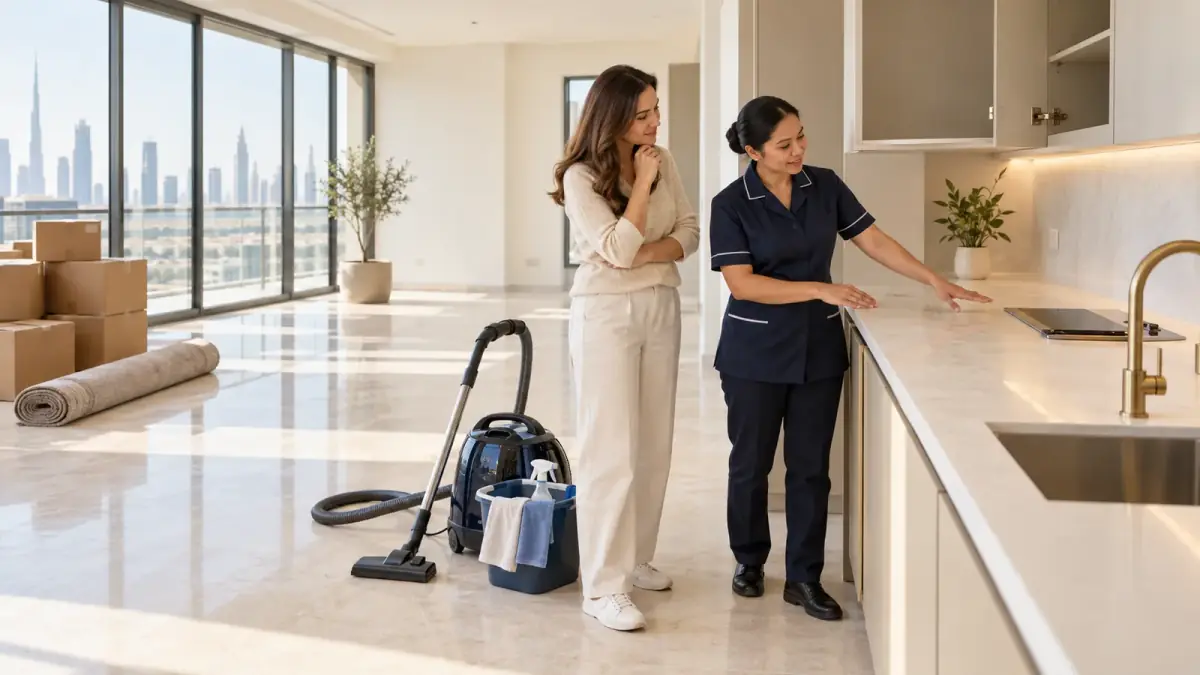
Regular maid visits, deep-cleaning jobs and move-in cleaning should be compared by the written task list, equipment, access and condition of the property. They are not interchangeable labels. A longer maid visit gives more time for agreed household work; it does not automatically include specialist machinery, restoration, high-access work or a landlord’s handover requirements.
Describe condition
Occupied, empty, moving or affected by other work.
Name the tasks
List surfaces, priorities and access requirements.
Separate specialist work
Identify repairs, high access and specialist equipment.
Agree the scope
Record tasks, responsibilities, price and handover.
Original scope-selection workflow. Specialist work needs its own assessment and written scope.
Describe the job before choosing the service name
Start with what you can see. Is the home occupied and maintained, empty before a move, or affected by renovation debris? Which surfaces need ordinary attention, and which have staining, damage or a maintenance problem? Explain these points with a room list and suitable photographs instead of asking only for a “deep clean.”
Use the household duties guide to distinguish the worker’s agreed role from additional services. For INAYA, discuss the proposed ordinary household work through the housekeeping service page. Work needing specialist equipment or skills should be assessed separately with the relevant provider.
Compare three different job briefs
This original table explains how to prepare a request. The final task list comes from the selected provider’s written scope, rather than the service label alone.
| Job brief | Main planning objective | Details to identify | Separate assessment to discuss |
|---|---|---|---|
| Regular household visit | Maintain agreed occupied areas | Priorities, accessible surfaces, floors and routine tasks | Additional tasks outside the normal role |
| Detailed or deep-cleaning request | Address named areas requiring more intensive work | Exact surfaces, buildup, access, products and equipment | Heavy lifting, restoration, high access or specialist treatment |
| Move-in or move-out request | Prepare an empty or changing home for the agreed handover | Cupboards, appliances, utilities, keys and inspection checklist | Contractor residue, repairs, exterior work and tenancy conditions |
A room can need routine cleaning while another area needs a different assessment. Split the request rather than treating every part of the property as one identical task. This makes quotations easier to compare and lets the household coordinate the work in a sensible order.
Keep cleaning, disinfecting and repairs distinct
The CDC explains that cleaning and disinfecting are different processes. A stronger smell is not a useful standard for a completed job. Identify the actual surface result and the product instructions instead of requesting extra chemicals as a substitute for suitable work.
A recurring leak, damaged seal, broken fitting or area affected by persistent moisture needs more than a new cleaning instruction. The EPA’s indoor-environment guidance identifies fixing leaks and controlling moisture as separate actions. Raise building or maintenance issues with the owner, manager or appropriate specialist before scheduling cleaning around them.
Prepare a move-in handover carefully
Check that water, electricity and safe access are available for the agreed work. Say whether the property is empty, furnished or still receiving deliveries. List cupboards or appliances to be addressed and explain what must remain untouched. Keep a contact person available to answer questions about belongings and access.
If an inspection is involved, obtain its checklist before booking and share the relevant items. A cleaning task list and a tenancy decision are separate records: the tenancy agreement and property condition govern the handover discussion. Keep before-and-after notes focused on the agreed work and take photographs only with appropriate permission.
Agree a sequence and review the actual scope
Complete repairs and other work that creates dust or residue before arranging the relevant follow-on cleaning wherever practical. Then identify the household priorities that remain. For routine visit planning, use the four-hour and eight-hour guide rather than assuming that every job can be fitted into a published visit length.
At quotation stage, record the areas, task boundaries, equipment responsibility and exclusions, together with the price and timing. Send the property condition, location and required outcome to INAYA to discuss the household role and the appropriate next step.
Customer questions and answers
Is deep cleaning automatically included in a longer maid visit?
The written task list determines the work. Extra visit time does not add specialist machinery, restoration, high-access tasks or other duties outside the agreed household role.
What should I send for a move-in cleaning discussion?
Describe whether the home is empty or furnished, the condition of surfaces, utilities, cupboards, appliances, access and any relevant inspection checklist. Identify repairs or contractor work separately.
Does a cleaning booking determine the return of my tenancy deposit?
Cleaning records show the agreed work performed. The tenancy agreement, property condition and the landlord or manager’s handover process govern the separate deposit discussion.
What should I do about leaks or recurring damp areas?
Report the underlying building or maintenance issue to the owner, manager or relevant specialist, then coordinate the appropriate cleaning around that work. Do not treat repeated cleaning as a repair.