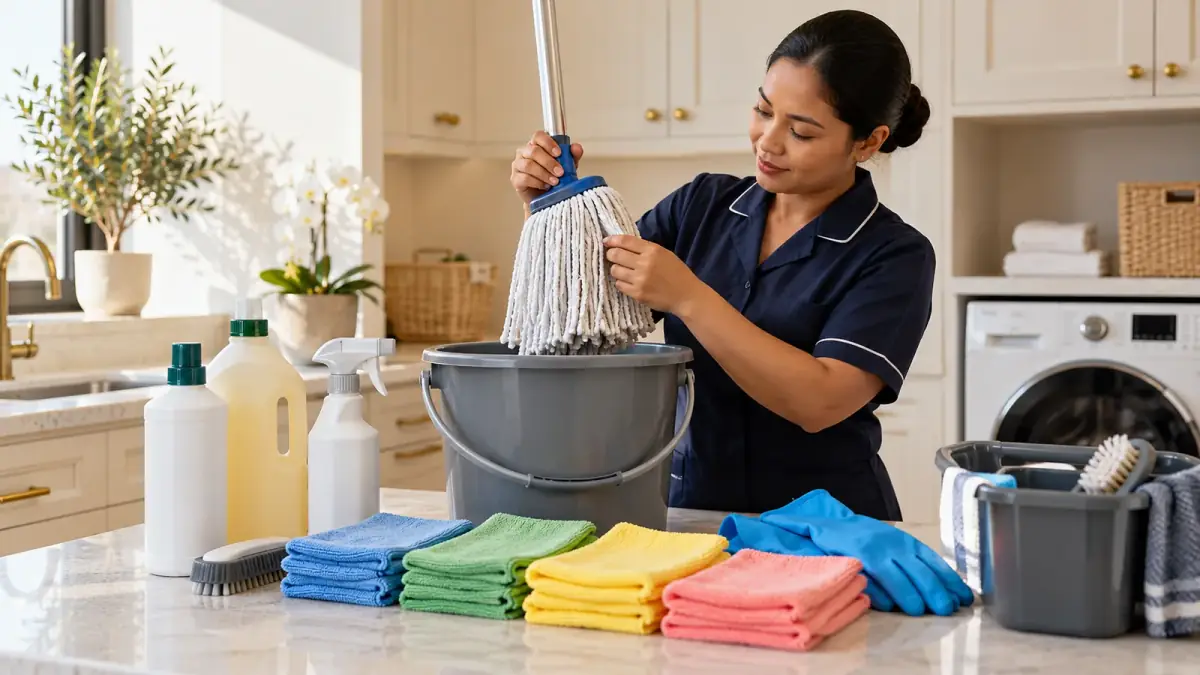
Prepare for a maid visit by matching the agreed tasks with suitable products, working equipment and clear surface-care instructions. Put the items in an accessible place and identify who supplies each one in the written service scope. A useful preparation list prevents the worker from spending the visit searching for tools or guessing which product belongs on a delicate surface.
Match tools to tasks
List the products and equipment for the agreed work.
Check condition and labels
Prepare working items and readable care directions.
Explain access and use
Show storage, surfaces and unfamiliar controls.
Record what changes
Note shortages, faults and the next preparation needs.
Original preparation workflow. Product directions and the written service scope guide the selected tasks.
Begin with the task list, not a shopping basket
List the work you want to discuss before collecting supplies. Cleaning accessible floors, preparing laundry and caring for a kitchen each need different equipment and instructions. For a focused visit, the four-hour and eight-hour guide helps keep the chosen tasks realistic. Buying more products does not increase the time available or add specialist work to a booking.
Check the monthly package inclusions guide alongside the quotation for supply responsibilities. INAYA’s published live-in and live-out package prices are the same; the written agreement records accommodation, transport, products and equipment responsibilities. Use that record to decide what should be ready at the home.
Use a practical preparation checklist
This original checklist is organised by purpose. Select the items relevant to your agreed work rather than treating it as a requirement to buy every item.
| Task or area | Items to prepare or identify | Handover detail |
|---|---|---|
| Accessible floors | Suitable working vacuum or other agreed floor tool; mop and compatible product | Floor material, controls, attachments and areas to avoid |
| Kitchen surfaces | Surface-appropriate product and clearly identified cloths | Worktop material, appliance instructions and food-preparation boundaries |
| Bathrooms | Appropriate labelled product and separate cleaning tools | Delicate fittings, ventilation and any maintenance issue |
| Dusting and mirrors | Suitable cloths and products for the named surfaces | Fragile objects and items the family will move |
| Laundry or ironing | Agreed detergent, care instructions and working equipment | Garment priorities, special-care items and settings |
| Waste and finishing | Correct bags and the agreed disposal location | Recycling arrangements, access and storage after use |
An inventory should also show items supplied by the provider under the selected agreement. Avoid duplicate purchases by checking that list before the visit.
Explain surfaces and demonstrate equipment
Point out natural stone, wood finishes, sensitive coatings and equipment with special care instructions. Keep manufacturer guidance accessible. Show the worker how unfamiliar appliances are operated, where approved attachments are kept and how to stop the equipment safely. Damaged plugs, leaking appliances or other faults should be addressed before that equipment is used.
The EPA’s household-product guidance recommends following product directions and keeping products away from children and pets. Keep labels readable and avoid presenting unidentified decanted liquids as ready-to-use cleaning products. Set aside products the household does not want used.
Keep product safety separate from cleaning intensity
The CDC’s bleach-safety guidance warns against mixing bleach or disinfectants with other cleaners. A worker should not be asked to combine products to make them “stronger.” Read the selected product’s directions for its intended surface, protective equipment and ventilation.
Share household preferences or restrictions clearly, including fragrance preferences and products to keep away from particular areas. Medical treatment decisions belong with qualified healthcare professionals; the household task list should simply communicate the relevant instructions supplied for the home. Specialist treatment, pest control or damaged-surface restoration needs its own assessment.
Make the arrival and handover straightforward
Clear the surfaces being addressed and identify a safe place for personal belongings. Explain the water supply, usable sockets, waste route and storage area. List a contact person who can answer questions about the scope rather than leaving the worker to make decisions about private possessions or unfamiliar materials.
At the end, return products to their agreed storage and record shortages, equipment faults and tasks that need different preparation. Use the household duties guide to keep later additions within the agreed role. Share the tasks, location and supply arrangements with INAYA’s team before planning the next visit.
Customer questions and answers
Does INAYA always supply cleaning products and equipment?
The written agreement records who provides the products and equipment for the selected work. Review that list alongside the scope before preparing the home or buying supplies.
Do I need every product in a cleaning checklist?
Prepare items that match the agreed tasks and surface instructions. A focused visit benefits from suitable, clearly identified products rather than a large collection of unnecessary cleaners.
Can different cleaning products be mixed for stronger results?
Do not mix bleach or disinfectants with other cleaners. Follow the selected product’s instructions for its surface, use, protection and ventilation instead of combining chemicals.
What should I do if the vacuum or another appliance is faulty?
Address the fault before the appliance is used and tell the coordinator how it affects the planned tasks. Discuss a safe working alternative or a revised task sequence.